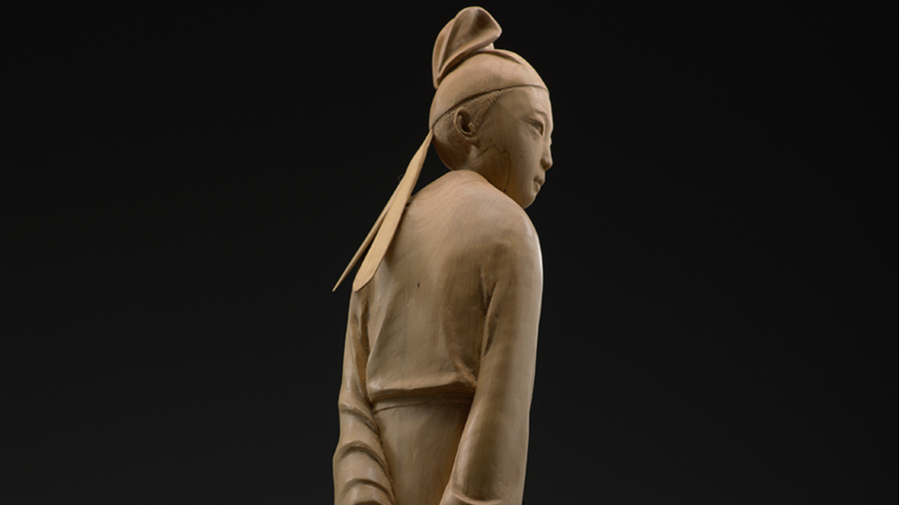
Li Shangyin
Introduction
Li Shangyin (813–858) was a renowned poet of the late Tang Dynasty, a period that is often celebrated as the pinnacle of classical Chinese literature. Known for his enigmatic style, Li Shangyin’s poetry is rich with allegorical nuance, dark undertones, and an intricate interplay of emotions and intellect. His works often explore themes of love, politics, and the passage of time, making profound use of symbolism and classical allusions. His poetry represents a complex weave of personal longing and broader existential inquiries.
Literary Contributions
Li Shangyin's poetry is noted for its sophisticated language and the depth of its metaphorical and allegorical elements. His work often embodies the tension between emotional intensity and intellectual abstraction, making his poems subjects of extensive scholarly interpretation. Li Shangyin made significant contributions to the shi poetry form. His oeuvre includes poignant works such as The Brocade Zither and Jade Pond, which are celebrated for the romantic and lyrical qualities.
His style is characterized by the use of imagery and allegory to express complex emotions and ideas, often leaving his poems open to multiple interpretations. This ambiguity has not only intrigued scholars but also allowed his poetry to resonate through the centuries, continuing to capture the imagination of readers and translators alike.
Influence and Legacy
Li Shangyin's influence extends beyond literature into visual and performing arts. His poetry has inspired numerous Chinese painters and calligraphers, who have interpreted his evocative imagery into their work. Moreover, his themes of romantic longing and existential reflection have permeated Chinese culture, influencing traditional music and theater.
In contemporary times, Li Shangyin’s works have gained international recognition through translations. Chloe Garcia Roberts, managing editor of the Harvard Review, has notably translated his works, bringing his poetry to a wider audience. Her translations strive to capture the essence of Li's intricate metaphors and the vivid sensuality of his original writing, as noted in her book "Derangements of My Contemporaries: Miscellaneous Notes," which was awarded a PEN/Heim Translation Fund Grant.
Cultural and Historical Context
Li Shangyin lived during the latter part of the Tang Dynasty, a time marked by political instability and cultural flourishing. This era was characterized by its openness to foreign influences and the flowering of what is considered classical Chinese culture, which included advancements in literature, art, and philosophy. The Tang capital, Chang'an, was a hub of cultural and intellectual activity, drawing poets, scholars, and artists from across the empire.
The political uncertainties of the time are reflected in Li Shangyin’s work, which often contains elements of political satire. His poetry not only illuminates the personal and the romantic but also offers insight into the social and political dynamics of his era. This duality of personal introspection and socio-political commentary adds depth to his legacy and underscores his relevance in both historical and modern contexts.
Li Shangyin's work is seen as a bridge between the classical traditions of earlier poets and the evolving styles of the late Tang and early Song Dynasties, marking a transitional moment in Chinese literary history. His ability to blend emotional depth with intellectual rigor has cemented his status as a pivotal figure in Chinese literature.
Scholarly Interpretations
Li Shangyin's poetry has been the subject of extensive academic study, with scholars exploring the multilayered meanings of his work. His use of allegory and symbolism has led to various interpretations, each bringing to light different aspects of his artistry. Some scholars focus on the historical and political dimensions of his poetry, while others emphasize the personal and philosophical inquiries that his work inspires.
The complexity of his writing encourages readers to engage in a dialogue with his text, allowing for a dynamic interaction between the poem and its interpreter. This interaction underscores the timeless nature of Li Shangyin's work, as it continues to evoke new meanings and insights with each reading.








